Vnesheconombank Chairman Vladimir Dmitriev’s Interview to the Expert Magazine
The Time of Strategic Investments
Expert
Moscow,
February 27, 2012
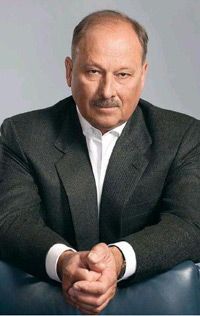 Accelerated economic growth and closing the productivity gap with the world’s leading countries require major investments supported by the state’s economic might represented by the budget, development institutions and state banks. VEB’s strategy focuses on this sort of development scenario.
Determining the scope and forms of the state’s efficient involvement in the economy has been an integral part of Russia’s market reforms in the past twenty years. In the 1990-es, the dominant notion was to minimize the state’s involvement in the economy which culminated in a very fast and not always well-thought out privatization of large chunks of state property. Nevertheless, later on the pendulum started to swing in the opposite direction. Arguments for recognizing the state’s specific functions which require not only to establish rules of the game and monitor their compliance but to directly participate in the economic activity started to sound more convincing in public and professional discussions, to be more specific, in the lines of activity which were avoided by market players because of their low profit margins, lack of resources or the absence of long-term objectives.
This trend resulted in a decision to set up state corporations in the second part of the 2000-es, that is, special institutions designed to fill up glaring gap in various market sectors ranging from encouraging innovations, establishing an individual deposit insurance system to accumulating assets in the defense industrial complex.
The Bank for Development and Foreign Economic Activities (VEB) set up in 2007 holds a unique position among state corporations. I’d like to remind you that the idea of establishing Russia’s Bank for Development on the basis of VEB was noticed and supported by the President and the presidential chief of staff as early as in 2005.
And it should be noted that both Vladimir Putin and Dmitry Medvedev have paid particular attention to the Bank’s activity and its problems during all those years.
VEB’s core activity is to fund investments that have high economic multipliers but are beyond the reach of private capital and the budget in terms of resources, risks and payback periods. Under the Law “On the Bank for Development” VEB is also to perform other functions. Some of them were inherited from Vnesheconombank of the USSR. They include management of pension savings funds, servicing of the Soviet-era foreign debt and a portion of the Russian foreign debt. Other functions are brand new and not only for the Bank but also for Russia as a whole. Here I mean providing support for small and medium-sized enterprises through refinancing banks lending them as well as insurance of Russian exports.
When the said Law was under discussion many swords were crossed over such extended interpretation of Vnesheconombank’s extended functions but this approach proved to be right. Completing the first five-year period of its activity, VEB has no “dormant” itemized functions in its portfolio, all its lines of activity are advancing considerably and some of them have been delegated to its subsidiary institutions within Vnesheconombank Group.
Crisis and Return to Basic Functions
The Bank’s systematic development was interrupted by the financial crisis of 2008-2009 when the Bank was instructed by the Russian Government to carry out measures for supporting the banking system, the largest Russian companies and the financial market. Our critics believe that Vnesheconombank was charged with taking crisis management measures as a paymaster that is, as a money sack automatically providing rescue resources. We’ll upset ill-wishers as we select assistance recipients and forms of government support rapidly but extremely thoroughly. None of the rubles or dollars received by Vnesheconombank from the budget or foreign exchange reserves were not either free or nonrefundable for us and for end recipients. This is also true of subordinated loans extended to the largest state-owned and private banks or those intended for rehabilitating Svyazbank and Globex Bank. The said funds prevented the banking sector in October of 2008 from plunging into a tailspin of system-wide crisis. It’s also true of credits extended to major private corporations for refinancing (because of significantly depreciated pledges) their foreign debt obligations.
In the course of emerging from the crisis our basic functions as a bank for development were returning to us, here I mean funding of investment projects of national economic significance. I’d like to cite some figures. Last year, VEB’s loan portfolio as a Bank for Development excluding crisis management lending programs which are scaling down now exceeded 500 billion rubles. It increased by 40% for the past year. And it’s crucially important that our Bank as a Bank for Development is responsible for funding mostly new large-scale projects in the real economy and this predetermines the structure of our loan portfolio which differs qualitatively from those of commercial banks.
We set ourselves a task of bringing a total amount of VEB’s funds intended for supporting our national economy to 1.9 trillion rubles or 2.4% of GDP in 2015. And in doing this, we’ll raise resources needed for funding projects on open foreign and domestic markets on commercial terms. Taking into consideration the fact that generating profits is not Vnesheconombank’s target function, our interest margin today is a bit more than two percentage points. For comparison, Russian large commercial banks’ interest margin ranges from about three to more than six percentage points. This reduces significantly the cost of borrowed funds for our customers. In a whole number of cases VEB’s lending rates are substantially lower than market ones.
For example, as opposed to average market interest rates of 15-20% on credits extended to small and medium-sized enterprises they do not exceed 13% and with regard to certain products – 10.5% in Vnesheconombank’s Group. VEB also differs from other banks in credit tenures. Today, 80% of our credits are extended for a period of 5 years and a maximum credit tenure amounts to 15 years and these credit tenures are unique on the Russian banking market.
Modernization through Reindustrialization
Stark numbers really matter because they tell us about real projects, that is, about hydroelectric power stations and plants that are being built in Russia’s market-oriented economy for the first time. An important thing is that under the Memorandum on Vnesheconombank’s Financial Policies we don’t have the right to fund oil and gas production or compete with commercial banks for projects that are attractive to them. About a half of VEB’s loan portfolio is concentrated in infrastructure projects. So, our objective today is to encourage a real diversification of the economy. We are participating in funding the construction of the Boguchan aluminum plant and the Boguchan hydroelectric power station. We are also responsible for funding the construction of a new passenger terminal in the Vladivostok international terminal as well as for reconstructing the Khabarovsk oil refinery. We are also participating in setting up the production of a new family of engines in the Yaroslavl engine plant. The Tobolsk Polymer Project is in its final investment phase. This project is aimed at constructing the largest polypropylene production facility in the former Soviet Union. Polypropylene is to be produced there through utilizing associated petroleum gas.
I’d like to stress that the Tobolsk Polymer Project was almost fully funded by foreign state export-import banks. VEB assumed all the project’s risks and that was extremely attractive for our foreign partners and reduced substantially the cost of raised funds.
I can give other examples too, but I’d like to stress the following. Recently, experts have often countered objectives of industrializing our country (sometimes they speak about reindustrialization or new industrialization) on the one hand with objectives of its modernization, that is, innovative economic restructuring on the other hand. We believe that this contraposition is quite hypothetical and unproductive. Nobody will deny the fact that a real economy of any country is an intertwining of various production and technological structures – from the most advanced to outmoded and ageing ones in terms of strategic objectives. But this doesn’t at all mean that a total growth in economic efficiency and labor productivity results from developing high-end production facilities and technologies. It’s also important to systematically upgrade and expand production facilities that do not relate to the said technological structures. In the end, this is the only way to gradually form sustainable demand for innovations which will have to win significant economic areas. It will enable our country to make its economy more efficient, close a twofold labor productivity gap with the world’s leading countries, which is becoming a key impediment to economic growth. Investments intended for developing the most advanced technological sectors account for a significant share in VEB’s portfolio. Here I can cite a project aimed at developing and exporting Russian supercomputer technologies and services. At the end of the last year VEB closed a transaction on purchasing a blocking stake in Russia’s leading supercomputer company T-platforms. I can also cite a project on constructing an advanced pharmaceutical integrated production facility FORT in the Ryazan region which is in line with GMP standards. We also fund a project to set up batch production of light multipurpose civil helicopter Ka226T as well as a number of other projects.
Russia has the potential to become first in Europe and fifth in the world in terms of economic might in the mid century despite extremely limited demographic resources. Increased ratio of capital to labor based on increased national rate of capital accumulation and diffusion of both domestic and imported innovations will create a qualitatively different economy. Only on the basis of such advanced economy we’ll be able to make fundamental social transformations in the country designed to increase the proportion of our middle class from current 25-30% of population to 50-60%, create sustainable demand for first-class fundamental and applied sciences and new education.
Let’s Support Exporters
The absence of a large-scale government credit, insurance and guarantee policy to support domestic exports and in particular civil high-technology products exports was the reason that our machine builders lost international tenders more than once. Suffice it to remember the tender for the supply of equipment to construct a Three Gorges Hydroelectric Dam in China, when our power machine builders offered pretty competitive equipment but lost the tender in the end because they failed to submit a package of financial and guarantee support documents. A similar situation emerged in Kazakhstan several years ago when our neighbors made a decision to reequip their fleet of railway locomotives and in the end they preferred General Electric’s railway locomotives whose technical performance was not better than the products of the Kolomna Locomotive Building Plant.
It is safe to say today that we have all chances to reverse the situation. In addition to specialized Roseximbank, another VEB’s subsidiary institution, namely, the Russian Export Credit and Investment Insurance Agency started to operate. Its legal framework and capitalization were completed last year.
The Law on the Agency provides for an opportunity for insuring sellers and buyers as well as banks responsible for funding supplies on the part of the exporter and importer. In the future, the Agency will be responsible for insuring Russian investments abroad, for example, in the case that a Russian company builds a production facility abroad. Here we have more complex risks. In fact, we are talking about monitoring a project at all stages of its life cycle.
The Agency will be responsible for insuring export credits for the supply of products and services to such top-priority regions as the CIS, South-East Asia and Latin America. But it does not mean that the Agency will not insure supplies to other regions. Top priority sectors include mechanical engineering, automotive industry, power engineering, chemical industry, aircraft construction, radio electronic industry.
The Agency has already provided insurance coverage for three export contracts for the supply of Russian high technology products to Vietnam, India and China. It plans to insure exports for a total amount of about 300 billion rubles over its first three years of operation.
Instrument for Improving Investment Climate
The past year saw the completion of economic growth recovery phase. Russia’s GDP grew 4.3% in real terms in the second successive year thus making it possible to overcome economic slump of 2008-2009. Main recessionary trends were overcome. Inflation was sharply reduced and unemployment rate fell to pre-crisis levels. Nevertheless, economic growth pattern didn’t change qualitatively. The crisis eliminated only “bubble” components in a number of sectors, specifically in the real estate sector which were inflated by excessive lending by banks that had access to foreign funding. Today our economy is growing on a healthier footing without “bubbles” and without gaps between labor remuneration growth and changes in labor productivity.
But our economic growth is not enjoying now the support of our foreign trade sector. Physical amounts of most exported raw materials products are stagnating or even falling and the price factor, especially in the current extremely unstable situation in the world economy, does not hold out hope for maintaining cost volumes of exports. At the same time, imports are increasing rapidly. As a result, last year, net exports contribution to GDP growth amounted to minus 4 percentage points. Foreign trade transformed from a driving force of economic growth into an economic growth impediment and macroeconomists believe that such situation would remain unchanged in the coming years. It is for this reason we have to transform investments into a main economic growth driver. And the state should initiate such a step relying on budgetary funds, development institutions and state banks. We can complain repeatedly about unfavorable features of Russia’s investment climate. But instead of complaining we prefer to take concrete measures. The Russian Direct Investment Fund established last year is to become one of the instruments for adapting our domestic investment climate to our partners’ standards.
The Fund is structured in such a way as to dramatically reduce risks for foreigners participating in its projects. The Fund’s managing company is a 100% owned subsidiary of Vnesheconombank. The state’s contribution to the Fund in the coming five years is to amount to 10 billion dollars. As part of each investment project the Fund is to engage investment partners whose contribution will be at least no less that the Fund’s contribution thus creating an efficient mechanism for making direct investments in the Russian economy. At present, the Fund is considering projects in the field of energy efficiency, medicine and in the agricultural sector for a total amount of 180 billion rubles.
Project Financing Based on Domestic Resources
The past crisis showed that it was extremely dangerous to place the main stake on foreign finances while forming consumption and savings resources in the country. Not only their cost but also their physical availability, as we could all see, were vulnerable to significant, difficult-to-predict fluctuations depending on a whole number of factors which can’t be influenced efficiently by Russia and its economic agents. So, the Russian financial system should be a lot more focused on using domestic resources in particular natural persons’ money.
The share of natural persons’ deposits in the funds raised by the banking system has reached today almost a third against 24% in 2008 and it is going to increase in the future.
For that matter, we should not disregard the fact that Vnesheconombank has unique financial resources which in our opinion have not been used to the full so far. Here I mean pension savings worth 1.3 trillion rubles. The funds are under our management in our extended investment portfolio. At present, the lion’s share of these funds are invested in government securities and only 15% of funds are invested in corporate debt instruments.
Moreover, there are securities guaranteed by the state in our conservative portfolio.
There is no doubt that a key principle in managing pension savings funds must be reliability aimed at ensuring the preservation of pension funds and generating reasonable profits to protect them from inflation at least. But in our opinion the existing instruments for investing pension savings are not being used efficiently and in part because a market for long-term investments has not been formed. The so-called infrastructure bonds might become a new investment instrument. Here I mean long-term bonds issued by such infrastructure companies as RZHD and the Federal Network Company and etc. A discussion on the need for such bonds and on the forms of arranging their issue has been under way in the professional financial community and government agencies for more than a year. It’s high time to get down to business. It’s issuers who should act.
We are often viewed as a sort of affordable money-box, as a quasi-budgetary instrument. In fact, sometimes VEB has to deal with non-core projects diverting significant efforts and resources from our core activity as a Bank for Development. This limits our capabilities as a development institution and affects directly our current financial indicators.
Nevertheless, in strategic terms the Bank for Development’s activity is aimed at long-term project financing in line with our core activity.
This approach implies that the state returns non-budgetary investments in the form of making payments for availability with due regard to generating new budget revenues from removing infrastructure restrictions. Thus, the state funds a construction project without using current budget revenues as is the case today but pays for a built facility on the basis of economic growth results.
In this respect, I’d like to say that a project principle makes it possible to unlock investment potential of VEB and Vnesheconombank Group and work out programs aimed at developing such macro regions as the North Caucasus, the Far East and Transbaikalia (all of them are within VEB’s investment jurisdiction) mostly on the basis of non-budgetary financing.
At the same time, this approach will allow us to use pension funds managed by VEB in its capacity of a state management company and it will also increase capabilities for using financial resources of infrastructure funds and direct investment funds. A transition to funding long-term projects that transform technological patterns, form new images of regions and cities, give impetus to social development is in our opinion a long-awaited dividend from a stable political development.
Back
[Bitrix\Main\DB\SqlQueryException]
Mysql query error: (1290) The MySQL server is running with the --read-only option so it cannot execute this statement (400)
REPLACE INTO b_iblock_section_iprop (IBLOCK_ID, SECTION_ID, IPROP_ID, VALUE) VALUES ('4', '7290', '80', 'News')
/var/www/veb/data/www/veb.ru/bitrix/modules/main/lib/db/mysqliconnection.php:137
#0: Bitrix\Main\DB\MysqliConnection->queryInternal(string, array, NULL)
	/var/www/veb/data/www/veb.ru/bitrix/modules/main/lib/db/connection.php:330
#1: Bitrix\Main\DB\Connection->query(string)
	/var/www/veb/data/www/veb.ru/bitrix/modules/iblock/lib/inheritedproperty/basevalues.php:224
#2: Bitrix\Iblock\InheritedProperty\BaseValues->insertValues(string, array, array)
	/var/www/veb/data/www/veb.ru/bitrix/modules/iblock/lib/inheritedproperty/sectionvalues.php:146
#3: Bitrix\Iblock\InheritedProperty\SectionValues->queryValues()
	/var/www/veb/data/www/veb.ru/bitrix/modules/iblock/lib/inheritedproperty/basevalues.php:104
#4: Bitrix\Iblock\InheritedProperty\BaseValues->getValues()
	/var/www/veb/data/www/veb.ru/bitrix/components/bitrix/news.list/component.php:276
#5: include(string)
	/var/www/veb/data/www/veb.ru/bitrix/modules/main/classes/general/component.php:594
#6: CBitrixComponent->__includeComponent()
	/var/www/veb/data/www/veb.ru/bitrix/modules/main/classes/general/component.php:653
#7: CBitrixComponent->includeComponent(string, array, NULL)
	/var/www/veb/data/www/veb.ru/bitrix/modules/main/classes/general/main.php:1037
#8: CAllMain->IncludeComponent(string, string, array)
	/var/www/veb/data/www/veb.ru/local/templates/.default/components/bitrix/news/press-tsent/bitrix/news.detail/.default/template.php:288
#9: include(string)
	/var/www/veb/data/www/veb.ru/bitrix/modules/main/classes/general/component_template.php:720
#10: CBitrixComponentTemplate->__IncludePHPTemplate(array, array, string)
	/var/www/veb/data/www/veb.ru/bitrix/modules/main/classes/general/component_template.php:815
#11: CBitrixComponentTemplate->IncludeTemplate(array)
	/var/www/veb/data/www/veb.ru/bitrix/modules/main/classes/general/component.php:735
#12: CBitrixComponent->showComponentTemplate()
	/var/www/veb/data/www/veb.ru/bitrix/modules/main/classes/general/component.php:683
#13: CBitrixComponent->includeComponentTemplate()
	/var/www/veb/data/www/veb.ru/bitrix/components/bitrix/news.detail/component.php:438
#14: include(string)
	/var/www/veb/data/www/veb.ru/bitrix/modules/main/classes/general/component.php:594
#15: CBitrixComponent->__includeComponent()
	/var/www/veb/data/www/veb.ru/bitrix/modules/main/classes/general/component.php:653
#16: CBitrixComponent->includeComponent(string, array, object)
	/var/www/veb/data/www/veb.ru/bitrix/modules/main/classes/general/main.php:1037
#17: CAllMain->IncludeComponent(string, string, array, object)
	/var/www/veb/data/www/veb.ru/local/templates/.default/components/bitrix/news/press-tsent/detail.php:70
#18: include(string)
	/var/www/veb/data/www/veb.ru/bitrix/modules/main/classes/general/component_template.php:720
#19: CBitrixComponentTemplate->__IncludePHPTemplate(array, array, string)
	/var/www/veb/data/www/veb.ru/bitrix/modules/main/classes/general/component_template.php:815
#20: CBitrixComponentTemplate->IncludeTemplate(array)
	/var/www/veb/data/www/veb.ru/bitrix/modules/main/classes/general/component.php:735
#21: CBitrixComponent->showComponentTemplate()
	/var/www/veb/data/www/veb.ru/bitrix/modules/main/classes/general/component.php:683
#22: CBitrixComponent->includeComponentTemplate(string)
	/var/www/veb/data/www/veb.ru/bitrix/components/bitrix/news/component.php:216
#23: include(string)
	/var/www/veb/data/www/veb.ru/bitrix/modules/main/classes/general/component.php:594
#24: CBitrixComponent->__includeComponent()
	/var/www/veb/data/www/veb.ru/bitrix/modules/main/classes/general/component.php:653
#25: CBitrixComponent->includeComponent(string, array, NULL)
	/var/www/veb/data/www/veb.ru/bitrix/modules/main/classes/general/main.php:1037
#26: CAllMain->IncludeComponent(string, string, array)
	/var/www/veb/data/www/veb.ru/en/press-center/index.php:6
#27: include_once(string)
	/var/www/veb/data/www/veb.ru/bitrix/modules/main/include/urlrewrite.php:159
#28: include_once(string)
	/var/www/veb/data/www/veb.ru/bitrix/urlrewrite.php:2